
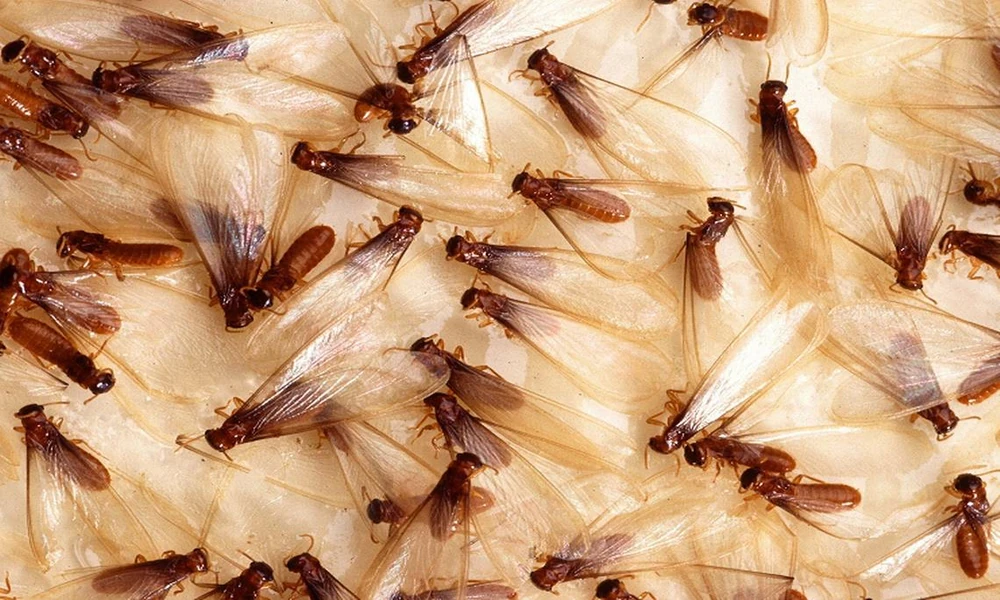
Every spring in Fayetteville, usually after a warm rain in March or April, something odd happens near the foundation of an older home. Look closer and you will see wings of termite swarmers rising out of the soil to start new colonies. For Northwest Arkansas homeowners, this swarm signals the start of termite season, which occurs every spring.
Understanding the cause and why Fayetteville is vulnerable can save homeowners from a major structural repair down the line . Many residents only call a Fayetteville Arkansas exterminator once the swarmers appear, but by then the colony beneath them has often been at work for years.
What Triggers the Spring Swarm
Termites are creatures of temperature and moisture, and spring in the Ozarks delivers an abundance of both. As the soil warms past 70 degrees and seasonal rains soak the ground, mature subterranean colonies release winged reproductives called alates. Their mission is to fly off, pair up, and start fresh colonies nearby. Several local conditions make Fayetteville unusually hospitable for swarmers:
- Persistent spring humidity. This keeps the soil damp and easy to tunnel through.
- Hardwood-rich surroundings. The oaks and other hardwoods common across the region supply plenty of cellulose, the termites’ main food.
- Clay-heavy soil holds moisture against foundations after the rain stops.
- An aging housing stock near the University and in established neighborhoods offers enough wood-to-soil contact.
The Damage You Don’t See
Subterranean termites are discreet. They travel through mud tubes that let them move from the ground into wood without touching open air. Because they eat timber from the inside out, a beam can look flawless while its interior has been hollowed to a shell. Common warning signs of termite activity include:
- Mud tubes climbing foundation walls or pier supports.
- Discarded wings near windowsills and doorframes after a swarm.
- Wood that sounds hollow when tapped or crumbles under light pressure.
- Floors that sag or doors that suddenly stick.
Why Prevention Beats Reaction
Spring termite pressure favors those who prepare and costs those who wait. Below are habits that can make a home less appealing to termites:
- Redirect water away. Working gutters, downspout extensions, and graded soil keep foundations dry.
- Break the wood-to-soil bridge. Store firewood off the ground and away from the house, and keep mulch a few inches clear of siding.
- Ventilate damp areas. Crawl spaces and basements that breathe are less inviting.
- Book a seasonal inspection. A trained eye catches mud tubes and early galleries before they threaten the structure.
The last point carries the most weight. An annual professional inspection, ideally scheduled before the spring swarm, is the most reliable protection against runaway damage.
When it comes time to bring in help, Palisade Pest Control has become a familiar name to Arkansas homeowners because its technicians treat termite season with the seriousness it deserves. The company pairs decades of regional experience with a clear satisfaction guarantee, so residents aren’t left wondering whether the threat has truly been resolved.
Acting Before the Spring Swarm Arrives
What makes termites dangerous is their patience. A colony can expand undetected for years, funding its own destruction one fiber of wood at a time, until a spring swarm finally announces what’s been happening below the floorboards all along. In a place as warm, wooded, and rain-soaked as Northwest Arkansas, this announcement is less a risk than a yearly guarantee.
The homeowners who fare best treat spring as the deadline they have already met. Schedule the inspection before the wings appear. Fix the drainage before the soil stays soggy. Clear the woodpile before it becomes a launchpad. Do those things, and the next swarm near your foundation becomes someone else’s problem.