
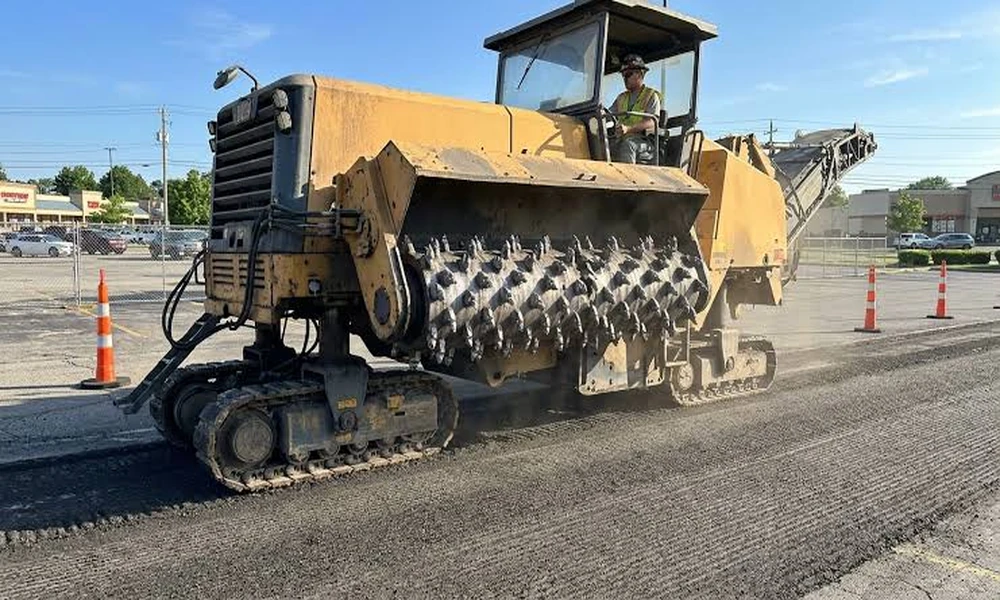
When asphalt milling is performed on a road or parking area under construction, you’ve seen how quickly the old, worn surface can change. The actual milling may be a great deal of work done in short order, but estimating the duration of the milling process can be much more complex than merely working out the square footage. There are lots of factors that contractors take into account prior to establishing an actual schedule, and even minor changes on the job site can impact the schedule.
Before creating a project timeline, experienced contractors rely on proven methods and planning resources to improve scheduling accuracy rather than making rough estimates. Reviewing an Estimate Asphalt Milling Schedules Guide helps explain how variables such as pavement condition, milling depth, equipment productivity, truck availability, traffic control requirements, and weather forecasts all work together to influence the final schedule. Using this information early in the planning stage allows contractors to set more realistic expectations, minimize delays, and coordinate crews efficiently throughout the milling process.
- It begins with a detailed Site Visit.
Contractors take time before the equipment gets to the job site to assess the project. They check the pavement, measure the area, and determine which areas are damaged and whether there are any utility covers, drainage structures, curbs, and landscaping areas. This preliminary assessment will give an accurate overview of what needs to be done. The milling process will proceed very rapidly if the pavement is only slightly worn. But if there are signs of structural damage or drainage issues, then more repairs may be needed, and this can lengthen the repair schedule.
- Project Size
Most people think that if the project is bigger, it will take longer, because there’s more pavement to remove. That is correct to a certain degree, but there are other factors to consider. Equipment can be moved about freely over a large open parking lot, and the milling can be done efficiently. A smaller site with several entries, corners, islands and/or heavy pedestrian traffic, however, might need slower, more careful work. Often, the square footage of the total area has as much an impact on productivity as does the accessibility.
- Weather Always Plays a Role
The best schedule is subject to flexibility. Milling operations may be temporarily halted due to rain, and extremely hot or cold weather may impact working conditions or impact subsequent paving operations. Professional contractors closely track weather conditions and sometimes add a bit more time to their schedules when facing inclement weather. This allows for more time to be taken to complete the project without the rush, if possible.
- Equipment and Crew co-ordination Matter!
A milling project is more than just the milling machine! There must be trucks to pick up reclaimed asphalt, sweeper trucks to keep the surface clean, and staff on hand to assist with maintaining a smooth flow of operations. When one part of the work is late, it can delay the rest of the work. The proper coordination of equipment operators, trucking companies and paving crews ensures that no unnecessary downtime is induced and keeps production going efficiently.
- Being ready for the unexpected!
Planning is key to a project, but there are always unexpected events that can occur during the milling process. Sometimes, contractors discover weak layers, utility problems are not found, or there are other repairs that need to be done. These are challenging to foresee at first glance and have to be dealt with prior to the resurfacing process. A good contractor will not make unrealistic deadlines, but will leave enough margin for error in case any unknown issues arise that will throw the whole project off schedule.
- Graphic representations which in turn lead to better results.
Making an asphalt milling schedule estimate is a combination of planning and experience. Contractors take into account such factors as pavement conditions, project layout, weather forecasts, equipment availability, traffic management and potential risks before estimating a time frame.