
Buying waterfront property can feel exciting.
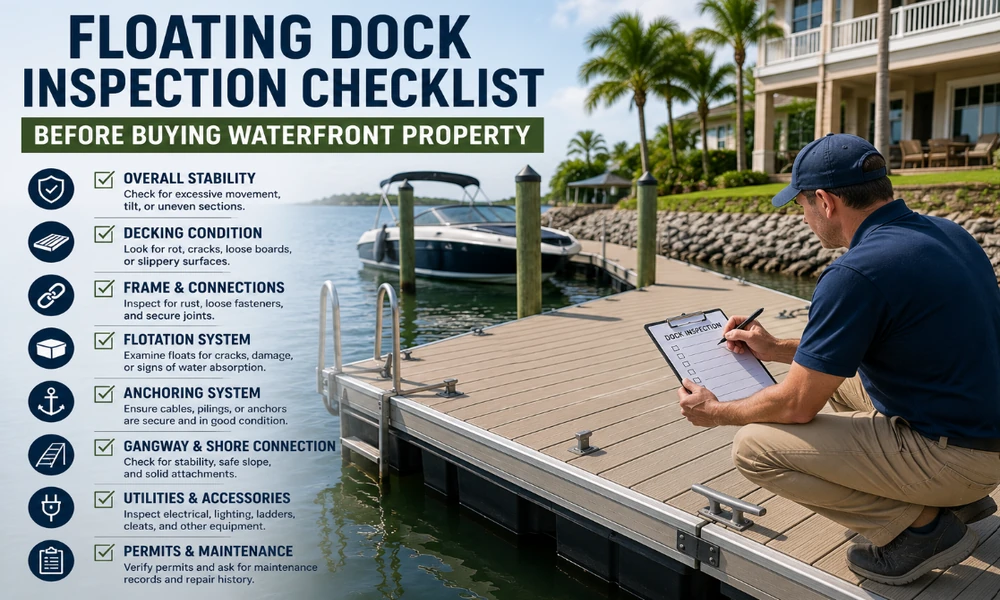
You may picture morning coffee near the water, easy boat access, and quiet evenings by the dock. But before making an offer, it is important to look closely at the floating dock already on the property.
A dock may appear fine from a distance. Up close, there could be loose hardware, damaged flotation, unstable sections, or signs of poor maintenance.
A careful inspection can help you understand whether the dock is safe, usable, and likely to need repairs soon.
Check the Overall Stability
Start by walking onto the dock carefully.
Pay attention to how much it moves. Some movement is normal because floating docks rise and fall with the water. Still, the dock should not feel overly loose, tilted, or unstable.
Notice whether sections move separately when they should remain connected. Excessive side-to-side motion may suggest problems with the anchoring system, connection hardware, or structural frame.
Also check whether the dock sits evenly in the water. A section that leans to one side may have damaged flotation or uneven weight distribution.
Inspect the Decking Surface
Look closely at the walking surface.
Wood decking may show rot, splitting, loose boards, raised nails, or soft areas. Composite decking can crack, warp, fade, or pull away from the frame. Concrete surfaces may have chips or damaged edges.
Walk the entire dock and listen for movement or creaking.
Loose or slippery decking can create a safety problem. It may also point to hidden damage underneath.
Check whether the surface provides enough traction when wet. Waterfront areas can become slippery very quickly.
Examine the Frame and Connections
The frame supports the dock and keeps the sections together.
Look underneath the dock where possible. Check for bent metal, cracked components, loose bolts, rust, missing fasteners, or damaged brackets.
Connection points between dock sections often receive a lot of stress. Hinges, couplers, and pins should be secure and in good condition.
Corrosion is especially important in saltwater areas. Surface discoloration may be minor, but deep rust, flaking metal, or weakened hardware could require replacement.
Look at the Flotation System
The flotation units are what keep the dock above the water.
Inspect visible floats for cracks, dents, punctures, or signs that they are taking on water. If one part of the dock sits lower than the rest, a float may be damaged.
Some older docks use foam that may become exposed or break apart. Loose foam can create maintenance and environmental concerns.
Ask about the age and type of the flotation system. Replacing several floats can become expensive, especially on a larger dock.
Review the Anchoring Method
A floating dock must stay secure while still moving with changing water levels.
Common systems include pilings, guide poles, cables, stiff arms, and weighted anchors.
Check whether pilings are straight, stable, and free from serious damage. Guide brackets should move smoothly without excessive gaps. Cables should not be frayed or badly corroded.
The anchoring method should match the local tide, water depth, current, wind, and wave conditions.
A dock may look stable on a calm day but behave differently during storms or heavy boat traffic.
Inspect the Gangway and Shore Connection
The gangway connects the land to the floating dock.
Make sure it feels secure and has a safe walking surface. Look for damaged handrails, loose connections, rust, sharp edges, or uneven transitions.
The slope may change with the tide or water level. Consider whether the angle remains practical during both high and low water.
The land-side connection should also be checked for erosion, cracks, movement, or damaged supports.
Check Utilities and Accessories
Some floating docks include electricity, lighting, water lines, boat lifts, ladders, storage boxes, or shore power.
Inspect these features carefully.
Electrical wiring near water requires special attention. Look for exposed cords, broken covers, damaged outlets, or makeshift repairs. Water lines should not leak or create slippery areas.
Ladders, cleats, bumpers, and railings should be firmly attached.
Ask About Permits and Maintenance Records
Before buying the property, ask whether the dock was permitted and whether later additions were approved.
Local rules may control dock size, placement, setbacks, environmental impact, and repairs.
Maintenance records can also be helpful. They may show when flotation units, hardware, decking, or anchors were last replaced.
A floating dock adds real value to waterfront property, but only when it is safe and in good condition.
Taking time to inspect the structure, anchoring, flotation, access points, and permits can help you avoid expensive surprises after the purchase.
This post was written by a professional at Supreme Marine Floating Docks. Supreme Marine Floating Docks is dedicated to providing top-quality floating docks and marine accessories that combine durability, innovation, and superior performance. While we are a new brand, our team brings over 50 years of combined industry experience, making us trusted marina contractors Ft Lauderdale. We are passionate about designing and delivering products that meet the highest standards, ensuring reliability and longevity in all marine environments. Whether for residential, commercial, or recreational use, our docks are crafted with precision and care, setting a new benchmark in the industry. At Supreme Marine, we don’t just build docks-we create lasting solutions.