
A few unexplained bites on your arm, an itchy welt on your shoulder, a partner who isn’t getting bitten at all. Most Denver homeowners who eventually call an exterminator started with exactly this kind of partial evidence and spent two or three weeks unsure whether they had a bed bug problem or something else entirely. The team at Hot Bugz spends a meaningful percentage of every initial conversation walking customers through what they should be looking for before scheduling treatment, because bites alone are not proof of anything. Roughly thirty percent of people show no reaction to bed bug bites at all. Plenty of skin reactions look like bed bug bites but are caused by something else. Catching a real infestation early matters because bed bug populations grow exponentially, but spending money on heat treatment for a problem that turns out to be carpet beetles or a contact dermatitis reaction is the wrong outcome.
The good news is that a careful homeowner inspection can usually confirm or rule out bed bugs in twenty to thirty minutes of focused looking.
What an Adult Bed Bug Actually Looks Like
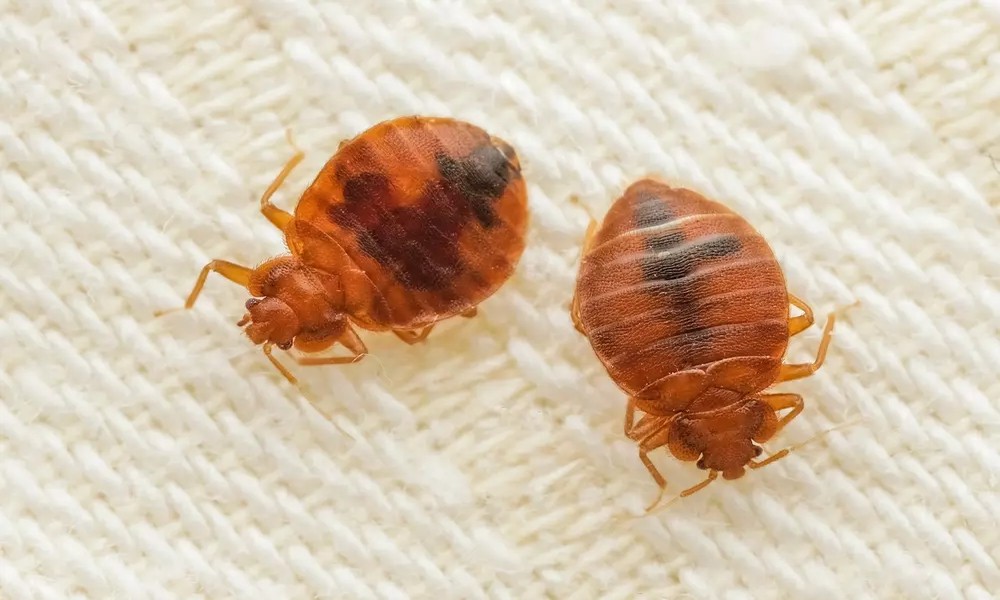
Adult Cimex lectularius are visible to the naked eye. They measure roughly 4 to 5 millimeters in length, which the entomology field has settled on describing as the size of an apple seed. The body is flat and oval before feeding, reddish-brown in color, with six legs and short antennae. There are no wings. Bed bugs cannot fly and cannot jump.
After a blood meal, the body swells, elongates, and darkens to a deeper red. A recently fed bed bug looks substantially different from a starved one and can be mistaken for a different insect entirely. The starvation form is wafer-thin and wrinkled brown.
Nymphs (immature bed bugs) are smaller and considerably harder to spot. The earliest instar is roughly 1 millimeter and translucent, almost invisible against light fabric. Each successive molt produces a slightly larger, slightly darker nymph, with the fifth instar approaching adult size. There are five molting stages between hatch and adulthood, and each requires a blood meal.
Eggs are pearl-white and approximately 1 millimeter long, glued in small clusters to hidden surfaces. They look like tiny grains of rice, and a heavy infestation will produce visible egg clusters along mattress seams and inside furniture crevices.
Where to Actually Look
Roughly 80 to 85 percent of bed bug infestations are concentrated within a few feet of where the host sleeps. The inspection priority order reflects that.
Mattress seams and piping are the single highest-yield inspection site. Pull the fitted sheet completely off and run a flashlight along every seam, particularly the corners and the head of the mattress. Use your finger to pull the piping open as you go. Look for live bugs, dark fecal spots, and translucent shed exoskeletons.
The box spring is the next priority. The dust cover (the thin fabric stapled to the underside) often hides the heaviest concentrations because the interior wood frame creates the dark, narrow harborage bed bugs prefer. Heavy infestations frequently have more activity inside the box spring than on the mattress itself. Removing the dust cover during inspection takes a few minutes and often produces conclusive evidence.
The bed frame and headboard harbor bed bugs in any joint, crack, or screw hole. Wood frames provide more harborage than metal. Headboards mounted to the wall (rather than attached to the bed frame) often hide significant populations behind them, where the inspection is harder.
The baseboards and carpet edges within a few feet of the bed are the next tier. Bed bugs travel along the wall-floor junction, and the gap between baseboard and carpet provides a natural harborage. Run a flashlight along this seam looking for fecal spots and shed skins.
Nightstands, dressers, and other bedroom furniture within a few feet of the bed are worth examining, particularly drawer joints, undersides of drawers, and the back panels of dressers placed against walls. Books and papers stored on a nightstand can harbor bed bugs and are easy to overlook.
Electrical outlets, picture frames, and light switch covers within the bedroom can show activity in heavier infestations, though they are usually not the primary harborage. Removing the cover plates of outlets near the bed sometimes reveals fecal evidence that is not visible elsewhere.
What the Evidence Actually Looks Like
Five categories of physical evidence confirm bed bug activity, and each has a distinct visual signature.
Live bed bugs are the clearest evidence and the rarest finding for a homeowner who is just starting to suspect a problem. Most early-infestation homeowners do not see live bugs during their first inspection.
Fecal stains are the most reliable evidence and the easiest to find. Bed bug feces is composed almost entirely of digested human blood. The stains appear as tiny black or dark brown dots, roughly the size of a pen tip touching paper. The diagnostic test is the smear test: dampen a white cloth or cotton swab and press it against a suspect spot. A real bed bug fecal stain will bleed into the cloth as a rusty-brown halo because the digested hemoglobin reactivates with moisture. Dirt, lint, and most other dark debris will not produce this reaction.
Rusty blood smears on sheets, pillowcases, and mattress surfaces are caused by crushed bed bugs, usually when the host rolls over in their sleep on a recently fed bug. These marks are larger than fecal spots, more irregular in shape, and pinkish-rust to bright red rather than black.
Shed skins (cast exoskeletons) accumulate as nymphs molt through their five life stages. The skins are translucent, papery, and retain the shape of the bug. Mattress seams and the interior of box springs are the most common locations. Heavy infestations produce a faint yellowish discoloration in seam folds where many shed skins have accumulated.
A sweet, musty odor is sometimes present in heavy infestations. The scent comes from bed bug aggregation pheromones and is described variously as resembling raspberries, coriander, or wet, moldy laundry. Light infestations do not produce a noticeable odor, so the absence of smell does not rule out bed bugs.
Why Bites Alone Are Not Proof
Bed bug bites typically appear in lines of three or more on exposed skin (the so-called “breakfast, lunch, and dinner” pattern), are concentrated on areas exposed during sleep, and produce a small raised welt with a central puncture point.
The diagnostic problem is that several other conditions produce identical-looking skin reactions: flea bites, mite reactions, scabies, contact dermatitis from a new detergent or fabric softener, allergic reactions to a new bedding material, mosquito bites concentrated on exposed sleeping skin, hives from an unrelated trigger, and several other dermatological conditions. The line pattern is suggestive but not conclusive, and the timing pattern (waking with new welts) is also produced by mosquitos that entered the bedroom overnight.
Roughly thirty percent of people show no skin reaction to bed bug bites at all. A bed-sharing partner who is reactive while another partner has no marks does not rule out bed bugs.
The conclusion: bites are a reason to inspect, not a confirmation. Physical evidence is required before treatment.
When K-9 Detection Makes Sense
Trained bed bug detection dogs achieve documented accuracy rates substantially higher than human inspectors in early-stage infestations. The dogs alert on the live bugs and viable eggs through their scent, which means they detect activity even in inaccessible harborages (wall voids, behind built-in cabinetry, inside mechanical equipment) where visual inspection cannot reach.
K-9 detection makes sense when visual inspection has been inconclusive but symptoms persist, when a property manager needs to inspect multiple units efficiently, when an apartment or condo wants to confirm whether a neighboring unit’s infestation has migrated, or when a real estate transaction requires definitive clearance.
The best practice is K-9 alerts confirmed by visual verification of physical evidence before scheduling treatment. A K-9 alert without a visible confirmation does not always justify the cost of treatment, and Hot Bugz operates on the principle of showing customers physical evidence before recommending heat extermination.
When to Stop Inspecting and Make the Call
If you find live bed bugs, fecal stains that pass the smear test, shed skins, or eggs in any inspected location, you have confirmation. The exposure to bed bug populations across the Denver Front Range is high enough that finding evidence in even one location usually means there is more activity than the visible evidence suggests.
If you have done a careful twenty- to thirty-minute inspection of the mattress seams, box spring, headboard, and surrounding area and found nothing, the bites you are experiencing are more likely to be from another cause. A second inspection a week later is reasonable if symptoms continue.
If you suspect bed bugs and want a professional inspection rather than continuing to second-guess your own findings, reach out to Hot Bugz to schedule an evaluation. We will not recommend heat treatment without showing you the physical evidence first, and the inspection itself will tell you decisively whether you have an active infestation or whether your symptoms are coming from somewhere else.